Showing posts with label philosophy of government.. Show all posts

Sunday, July 31, 2011

THIS! Or in Canadian, "Peace, Order, Good Government."

I found this in the comments section of  a TPM post; an otherwise forgettable rhetorical drive-by of an entirely deserving target. The thread was mostly partisan, and mostly well-aimed jibes at a target that more than deserves to be mocked, because she's an insult to the intelligence and principles of anyone who actually should be engaged in the process.

Now, this assumption was inherent in the post and the reaction; it is of course the underpinning of the Resistance ... I mean, the rather incoherent gasp of horror that is the US Progressive movement. But I've never really seen the resistance to the tea-tards put so well. It's not enough to mock and resist; one really should know why, or one's disdain can and perhaps should be dismissed as mere partisan sniping.
guntotingliberal1 DAY AGO
The GOP loves to fight, loves to win, but frankly, finds governing a pain in the ass. They don't think it should or even can be done properly, since government is the problem, not the solution. Why people vote for individuals who despise the process they're fighting hard to become a part of is so far beyond me as to make me, in my own view, practically a foreigner in my own country. 
I don't want an arsonist managing my lumberyard.
I don't want government-haters running my government.
Seems simple to me. I believe in our government, and the founding fathers who risked and sacrificed everything they had to establish it. I'm tired of idiots telling me the People shouldn't rely on the government. We the People established the government. It's ours. We made it. and we made it to help solve problems. To rely on institutions set up to help us is not a shame. Tearing down those institutions is.
I love America and I love my American Rights. I love our open arms and our promise of hope to the wretched refuse of the world -- you know, our grandparents and great-grandparents, and their parents, and theirs, etc.
 Emphasis Mine.

Tuesday, March 29, 2011

Why I'm Not Voting for "Harper's Government."

The G20 summit caused chaos in Canada’s largest city and accomplished nothing other than a $1-billion photo-op for Stephen Harper, Liberal Leader Michael Ignatieff said Monday during a campaign stop in Toronto

"The Harper Government," illustrated above, is not Conservative, save in the depressingly Neoconservative (Neoliberal) sense. And that is to say, not at all. Ignatieff is wrong; that billion dollars was well spent, if you understand what Harper's Government was trying to achieve; what he was trying to communicate to ordinary citizens and the world.

[N]ot only is the Conservative vision of an executive based, uniform and militaristic nation-state a coherent and substantive vision, but the Harper government has taken concrete and bold steps during a short minority government to make this vision standard operating practice.  It is time this was broadly acknowledged. The orthodoxy that the Harper government is a government that doesn’t do much be less superficially circulated. And a consideration of all that exists inside the otherwise thin description of the Harper government brand be undertaken.   Perhaps it is time to recognize that in current practice the Harper government is the government of Canada and the government of Canada is the Harper government.  If people do not like that equation then they should respond to the substance of this equation rather than just questioning the act of rebranding itself.
Enhanced by Zemanta

Who wins a cultural war? The one who gets there furstist with the mostest.

"Ruins in Richmond" Damage to Richmo...Image via WikipediaWhen the Wall Street Journal publishes a piece like this, you best stop whatever you are doing and pay attention. Because we are not speaking now of subtle indications of possible future unrest, we are talking about immediate, actionable intelligence.

Tax the Super Rich now or face a revolution Paul B. Farrell - MarketWatch
Yes, tax the Super Rich. Tax them now. Before the other 99% rise up, trigger a new American Revolution, a meltdown and the Great Depression 2.

Revolutions build over long periods — to critical mass, a flash point. Then they ignite suddenly, unpredictably. Like Egypt, started on a young Google executive’s Facebook page. Then it goes viral, raging uncontrollably. Can’t be stopped. Here in America the set-up is our nation’s pervasive “Super-Rich Delusion.”

The same thing, from a different perspective, to the parents of the potential revolutionaries.

COLUMN — American workers got what they deserved - Holland, MI - The Holland Sentinel
Remember the Reagan standard? Are you better off today than you were a decade ago? Two decades? Three? Unless you make more than $380,000 a year, the answer is no. In fact, your standard of living over the last quarter century has actually decreased while millionaires have added 30 percent to their net wealth. Why? Two reasons.

First, hundreds of thousands of manufacturing jobs went overseas while the politicians you elected did nothing to stop them. Yet you continue to elect leaders who offer nothing but tax cuts, as if that would stem the flow of disappearing jobs.

Did you demand your leaders address America’s trade imbalance or continuous outsourcing of jobs? Did you demand your leaders require foreign countries to buy a dollar’s worth of American goods for every dollar of goods they sell here?

No and no. You didn’t bother. You simply crossed your fingers and prayed, “I hope my job’s not next.” You made concessions to your employer and hoped that would stem the exodus of jobs, or at least yours. How’d that work for you?

I've spoken a lot about this potential over the last decade, and this is a recurring theme. Sane people do not govern or regulate like feudal barons, because, well, history tells us what happens in the historical short term to such barons. When authority abuse becomes pervasive and when those who complain of it are routinely targeted for reprisals, those people who are in authority and the institutions they control cease to be supported by those who pay for them. What happens next? If you are an American, I suggest you re-read the preamble to the Deceleration of Independence and the Second Amendment.

Graphictruth: Civil War
Unless it becomes quite clear that the danger to the administration from the left is just as grave as the danger from the right, and by "danger" I mean a very literal potential danger, there will be no progress. It's not about Left and right, it is about Lawful and Unlawful, a choice between the Rule of Law and the rule of unworthy, corrupt, unaccountable sociopaths. Such people will not simply admit defeat. The only "dirty bomb plot" EVER proven to be greatly advanced past the wishful thinking stage was by a Nazi-identified Maine Millionaire.

And it was apparently aimed at the Obama Inaugural.

It's not cynical to say that might makes right - for no right has ever been established in the face of superior might. So progressives should start thinking as to whether their convictions carry with them the courage to fight, at need. For that need may well come, and  weak Reids will not serve you well.

I expect that the next decade will be of great interest to future historians, and I publicly doubt there will be a recognizable United States for much longer than 50 years. I just hope that the changes will occur with only moderate loss of life.

History and human nature doesn't lead me to optimism on that score, but I still strive to hope.
Enhanced by Zemanta

Tuesday, March 08, 2011

Solving the Budget Crisis - Anywhere.

The first rule of budgeting is to look at your costs and priorities. It's as true for governments as it is for people. You look at the various things you spend time and money on and you decide if they actually bring the benefit you once thought.

This is one very dramatic example.


Watch the whole thing, and then realize the overwhelming truth. A positive budget shift of more than 2 billion dollars more or less immediately upon stopping the drug war. In California. Alone. 2 BILLION dollars.

I don't have to be an advocate of recreational drug use or medical marijuana to make that argument. I just have to point out that flushing two billion bucks down the crapper in return for no good outcome, much less anything like the intended outcomes (other than getting politicians elected) is really very stupid.

Let's look at a few other things going on in society. Currently, the majority of incomes are static or going down. This is due mostly to pressure from right wing groups (social and fiscal) who see the solution to everything to be cutting taxes and defunding "entitlement programs" like social services, medicare, etc.

On occasion, I do wonder if they ever think about consequences - at all. For some number of persons denied affordable health care for a loved one or a shot at a decent job will certainly cook methamphetamine to cover expenses. They will certainly consider stealing a BMW to pay the rent.  That is to say, you increase the statistical motivation for crime while at the same time decreasing the ability of  government to statistically decrease and prevent crime. Well-educated people, for instance, tend to have more lawful options, so are less likely to resort to violent crime. At the worst, they are less likely to blow their apartment building up because they couldn't read instructions for cooking  a drug.

Let us also remember that every usage of government comes at the price of something else it could be doing. This is a point Judge Grey makes above; that drug wars come at the price of investigating and prosecuting other crimes which, obviously, should take priority - basic things like murder, rape and robbery.

But it's also less obvious that many things government does are best done because they have diffuse, widespread benefits. Things like public health and welfare; universal, affordable heath care, vaccinations, sewage treatment, even direct welfare programs. These have many diffuse benefits that are obvious only in their absence; allowing ourselves to be ideologically blinded to the macro benefits because the "wrong people" will benefit on the micro level is breathtakingly stupid. Karl Smith illustrates this point.

If we want to build a model of what the government spends money on we would be best to start this way: ask people what social obligations do they believe “society” has. Look around for the cheapest – though not necessarily most efficient – programs that could credibly – though not necessarily effectively– address those obligations. Sum the cost of those programs. That will be government spending.

Contrary to Jonah Goldberg and others who see Canada and the United States as examples of two clashing ideologies, they are actually examples of two different ethic distributions.  The United States is not Canada because there is ethnic strife between Southern Blacks and Southern Whites. That strife reduces the sense of moral obligation on the part of the white majority and so reduces government spending.

I want to be very clear that I don’t say this to paint those against social spending as racists. From where I sit I am betting that most of the intellectuals lined up against expanding the welfare state are naively unaware that their support rests upon racial strife. Otherwise they would realize that as America integrates they are doomed. They are fighting as if they believe they have a chance of winning. Given the strong secular trend in racial harmony, they do not.
I point this out also to show why the major Republican strategy for limiting government was doomed from the start and why I am also not particularly worried about Americas fiscal future per se.
Now, it's becoming increasingly clear - to me at least - that people tend to discount the price they are willing to see other people pay to create the sort of society they would prefer to live in. I'd like you to try and look at this objectively - of course, I would be expecting rather a lot of you to do that. But try to look at the following and say, hm, supposing this actually was a sane idea that could arguably accomplish something positive, how much would it cost, and would it actually make more sense than, say, taking a third of that money and opening drug rehab beds, while blowing the rest on - oh, I dunno, something silly, like flood control?

Dick Morris calls Ron Paul ‘horrific’

If only Dick Morris would tell us how he really feels about libertarians.

During a radio interview with Peter Schiff, a former economic adviser to Ron Paul’s presidential campaign, Dick Morris thought he’d be talking about his new book, and seemed annoyed when he found himself discussing trends within the Republican Party.

Schiff, who said he noticed that nearly a third of the people he met at CPAC came from the “Ron Paul/Gary Johnson wing” of the GOP, with the rest in the more traditional conservative camp of Mitt Romney, asked Morris how he thought this would play out in the presidential race.
“I strongly oppose Ron Paul,” Morris said. “I think he’s horrific. He wants us to end the War on Drugs. He wants us to end the War on Terror.”

“Do you think we’re winning the war on drugs?” Schiff interjected.
“No, because we’re not fighting it,” Morris replied.

“We’re not fighting it?” Schiff asked. “We don’t have enough laws against drugs?”

“No,” Morris replied. “We should drug test every high school student. We should drug test everybody that gets a student loan. Anybody that’s using drugs should not get a government student loan.”

Schiff argued that there was something vaguely socialist about the government giving out student loans in the first place, but Morris disagreed, and became increasingly annoyed.

“Peter, I’d like to talk about my book, which is ‘Revolt: How to Defeat Obama and Repeal his Socialist Programs,” Morris complained. “You know what, Peter? You talk to yourself for the next 15 minutes. That seems to be what you want to do.”

And with that, he hung up.

Morris’s feelings about Ron Paul are not a secret, as he called him “crazy” in a column in 2007. But the drug testing for all high school students is new, as far as I can tell. Morris did not respond to a request for comment.
UPDATE: Morris emails to clarify: "Yes, I support drug testing for all high school students with those who fail getting rehab. I support drug testing for all recipients of student loans and those that fail should be tested again and, if they fail, the loan should be terminated."
Let me get this straight here. Socialism is bad, because it presumes that some central planner, some "bureaucrat" has inappropriate power over you, and of course, the obvious objection and argument, that such immense, overreaching structures with their arbitrary rules and institutional mentalities are woefully inefficient at doing anything cheaply or well... but collecting pee in cups along with SAT tests is somehow an exception to that rule? Derisive laughter is the only possible response!

Government is best done when it's focused on what people actually do need and how they actually will behave. It makes a terrible nanny. It does well when it does what it absent-mindedly can to make resources, information and spaces available so that people can most effectively help themselves. Oh, and the best reason for it to do that is because people will help themselves and those who they approve of, regardless of what any particular government might think of that proposition, or who they feel has the "God-Given right" to determine the fate of the majority of people.

Friday, January 07, 2011

A crappy metaphor, indeed.

In some ways, this is a belated New Year's resolution, and it's also a new decade's resolution.

I'm not going to be bothering to comment on blatant idiocies. I'm going to trust that you are smart enough to see blatant idiocy when you see it. But you should not assume that there's a "side" or an "ideology" that is somehow immune to such shrill, self-righteous public stupidity. The "Left" is just as capable of fucking up as is the "Right," and as often as not, for the very best of intentions.

As human beings, we tend to make assumptions about reality that are more abut what we want to believe than what actually is. Reality is complicated and messy; we'd prefer it to be simplified. People are complex and multifaceted, we'd prefer that the vast majority could be summed up and dismissed in one paragraph or less - and not for reasons that even speak terribly ill of us as humans.

We just don't have the time or the ability to give much of a damn about people outside of our immediate lives. As a matter of pure self defense and as a necessary step towards maintaining sanity, we latch upon the superficial as a way of limiting the things we must care about.

If you are sane and decent and ethical, that's probably about as much as anyone has a right to ask of you.

We rely on social mechanisms to tell us about things we really do feel the need to care about and if need be, do something about those things, if enough people agree on what is to be done. That is to say, we rely on journalism and government to inform us about matters that concern us and government to deal with things we collectively decide to be collective responsibilities - like, say, our various national defenses, our various approaches to heath care, food safety, fire protection and the education of the next generation.

I think that people capable of thinking for themselves have abandoned mainstream journalism in favor of social media and I'm coming to expect that watching what passes for government govern is making people wonder if there might possibly be an app for that as well.

The nasty truism that people get the government (and journalism) they deserve still has bite; those who used to write for an informed audience have gotten tired of putting up with the shrill plaints of those unwilling to deal with unpalatable realities, or have been fired by a management that prefers a consistent message to awkward facts.

So it's becoming difficult to find an informed opinion on an internet filled with opinion and little else.

I'm as unwilling to waste my time giving a "fair hearing" to a doctrinaire Marxist as I am to the equally irrelevant opinions of Conservative Christians who expect me to give their creationist contrivances and moralistic assertions the respect they think they believe they merit. Feeling the need to argue with stupid people is even more of a vice than being stupid; you have to realize it's pointless, so it's merely another way of being an asshole in public and feeling good about yourself in the morning.

Take the so called "new athiests." Many of the new athiests can be really offensive assholes. Which is not to say that they are wrong about their perceptions of Christian culture. Or Islamic culture. I do happen to think that both cultures would offend and appall Christ and Mohamed, and their snide critiques are often wickedly entertaining.

Nonetheless, I can observe the same things without being an offensive jerk, comparing God to an "invisible pink unicorn" or the tooth fairy, and I also know that stealing Linus's security does not ever improve Linus. If you dismiss religion as a "crutch" - well, possibly it is. But what does that say about you when you try to kick someone's crutches out from under them?

Ironcially; many of the complaints made by atheists against the behavior of offensive Christians are things that Christ Himself complained of. So perhaps this isn't about who is right, but rather about who is pissing into the harder wind. I believe I shall abstain.

Athiests - and by this, I mean "social athiests," because all I'm commenting on is herd behavior, are no different than anyone else. They want the people that annoy them to go away. Well, sadly, they won't. Now athiests may legitimately say they are asserting the right to stay and be themselves. To that extent, I applaud them, along with evangelicals, Wiccans, flat-taxers, small-government idiologues, creationists and anti-masturbation activists.  Please, live by your beliefs and put your ideas in the marketplace.

Just don't confuse that right with the right to demand that I believe what you have to say or respect your world view as being just as good as my own, nor complain to me when the results of living your beliefs aren't exactly as was advertised in the brochure.


That's a bridge too far, and that's always how those who crave simplicity manage to complicate matters.

I dislike, for instance, the cultures that exist in the so called "Red States," the very authoritarian, structured, culture-bound, moralistic and conventional cultures, which of course exist everywhere. But they exist for a reason. That reason is that a LOT of people feel much more comforatable there than they would here. Such people are part of the fabric of humanity, it seems, and they will always confuse their own needs with some greater social or moral imperative. But then, so do you, and from time to time... it may happen that I do as well.

I reluctantly admit that my own reaction is as much about my own tribalism and essential nature as theirs. So I live where I'm not bothered by them, I don't go to places they frequent and don't seek to disturb their lives - unless, of course, they ask me very nicely and compensate me for my trouble. 

But poltical culture has descended to arguing who has the right to impose what set of inconveniences and insults upon whom, rather than coming to some useful agreement on what needs to be done to get everyone through the winter, I'm done with political writing. Because that's the only point to the exercise.

Every morning I read the news, and yet I don't write about it. It's stupid and tiresome and frankly, even the very best commentary is mired in a partisan world view enslaved to such short-term news and economic cycles that it has no real value to a person wanting to live a thoughtful and useful life.

I'm committed to telling the truth, and understanding and communicating realty as best as I can, with the perceptions and the experiences I have. Every once in a while, I must therefore revisit my own working assumptions, test my own ideas against reality and see if what I'm doing is actually working. I'm in the midst of that process right now, and I'm still unsure as to whether I will continue blogging, and if so, about what.

But there are a few things I am sure of.

I'm not in the least "objective" in the mythical and unapproachable sense that classically "liberal" journalists strive for, nor am I willing to pretend that my bias is "common sense" or a "fair and balanced" view. And I'm afraid that is incompatible with finding a true home in any particular ideological, political or doctrinal camp. I'm not condemning here. Advocacy journalism, which is what MSNBC does badly, Fox does even worse and Mother Jones does fairly well is perfectly fine, as long as it is not confused with objective reporting.

Remember, in neither form is it permissible to actually lie. Not because lying is, like, wrong and stuff. No. It's because once I know a source is willing to lie to me - I stop listening. I certainly don't pay money to have my intelligence insulted. The purpose of the one is to persuade me using verifiable facts. The other is to provide facts in detail and context and let me make up my own mind about what it means and what I should do about it. I don't expect perfection - but increasingly, I'm finding I'm less informed about the world by partaking in the news than I was before I sought to relieve my ignorance.

Objective journalists aren't (they try nobly and fail regrettably) while advocacy journalists strive for a cause and a vision, in the hope and belief that they are correct... and the better grades of them will admit that is not nearly as often true as they would prefer. In BOTH cases, they have to be reliably more useful to me as a consumer of information than smacking myself in the face with a board. And I have no real social need to be "well informed" in the ways that would make me popular at cocktail parties.

At heart, I'm a lighthouse keeper. I value solitude and need a very small social circle indeed. It's nice to know that I've swayed a person this way or that - but I don't need to add them to my circle of followers, nor is it important to me that a person who is my friend agree with me in every respect.

That is more than just upbringing and experience - that's my nature, which in many ways predetermined the range of experiences I'd seek out and the effects any parenting could possibly have. It's neither a disability nor a blessing - it's merely what I am. It influences what I can do, and what things I should concentrate on.

This is true for you as well, no doubt in completely different ways. The only way I differ is that the way I am is a bit uncommon, so there are no conventional excuses for my reflexive behaviors. There is no church of St. Bob, The Autistic. I don't get to pretend there are really good reasons for choosing to behave and react as I do. I think, in a strange way, I'm rather lucky in that respect.

None of us acorns fall far from the tree of our essential being, regardless of how normal we may appear to others. How we choose to go about expressing our behavior, and whether we love or loathe ourselves for being what we cannot help but be in some way DOES matter. What matters even more is what harm to others do we do along the way and if the good we do outweighs the bad.

I take a ruthlessly practical view of harm. Actual harm to real people in concrete, measurable ways is more significant than theoretical harms, like, say, "maintaining our way of life", "protecting our family values", "defending the faith against those who would defame it" or "making the world safe for democracy."

Harming someone right now in the name of staving off a supposed future "harm" of that nature is simply wrong. That is about the most simple truth that I know, and really the only important one.

The priest that tells you that their god demands a life to permit the crops to grow should be the very LAST sacrifice to that god. Find another god, or do without. Any god worth following should be a better person than you are. That's a standard that applies to church and elected officials, I might add.


For there is no great movement, no unified religion, nor any great singular social vision that can work save by treating large numbers of people as no more than grit in their perfect gears. The "Left" and the "Right" have taken turns proving this, and if those lessons are cited selectively, it should be observed that the people who lead such movements tend to end up with much fatter bank accounts than they could otherwise aspire to, so they tend to rely on the insights that are favorable to them.

So let me council a gentle skepticism toward those offering simple answers to complicated questions, like Hard Money or One World Government.


You may note that nations and cultures rise and fall - but humanity chugs along. The Bible, The Koran, the Prose Eddas, the very oldest and most treasured writings - there is not one of them that you will not recognize yourself in. You will boo the villian, you will cheer for the hero; you will be moved as people who first heard the story were moved. People, in other words, are people and human nature wins, every single time, despite all efforts to stamp it out and make us into perfect angels or demons.

All civilization, all political and social organizations, every stupid committee, every tea party, every single government in every nation has but one essential task; to permit as many people as possible to live and work together in close enough proximity, as unbothered as possible so that they may act in various ways to the diffuse and collective benefit of all. That's it.

A capable government is very much like an invisible stage hand - it makes sure that the things that are needed appear as if by magic; it does not crave more power than it needs to do what the time and circumstances require and - most essentially - while it realizes that a little mythology and wishful thinking is important - believing it is extraordinarily dangerous.

Liberals pretend that everyone is, or would be, very altruistic - and if they are not, it's due to bad company while being brought up by toothless alcoholics in trailer parks.

That's as mindless a prejudice as those against liberals, wingers will say, are inherently immoral, hopelessly addicted to pot-smoking and fornication and of course, are all jobless lusers, of no possible consequence or importance.

Hm. Well, if the intelligentsia of both sides are presumably living in the basements of their parents, and the only significant distinction is a choice between Bud and Budweiser... why listen to either? You see, my friends; if that is who you see your most important opponent to be - well, that's exactly the significance of what YOU stand for.


Sadly, the political leadership of the US and, increasingly, the world, is convinced that it needs only appeal to THAT sort of person. It presumes that nobody is any better than that, nor smarter than that - and governments that act that way attract talent of that quality. Such talent isn't very talented, nor do they well serve the needs of the majority.


When people have the ability to ignore such buffoons, they do, and when they must interact with them, mostly they will get the better of them. If they must work around them, they will find it easy, if they must corrupt them to get things done, they will, and it won't be all that expensive. Of course, nobody will have a decent or useful government, but you don't miss what you have never known.


Anyway, I'm simply not the sort to take this to the next step - which should be fairly obvious, along the lines of taking matches away from small children and saying that lawn darts are no more toys than are javelins and blowpipes.But I'll tell you what it is.

Do you know the most significant legacy of every single notable government? Ever?

Waste management! A govenrment is about managing all the crap that accumalates when enough people gather together for a civilization to occur. The LITERAL crap comes first. It's no more romantic and no less essential than that.

Latrines. Roads. The regulation of the marketplace and the policing of highways so that people will come and trade. Thankless, largely routine, not much fun and certainly at all heroic on a good day, so we do tend to glitz it up a bit with thrones and parades and Hail to the Chief.

But at the end of the day, the stuff that matters is the stuff that doesn't happen, not the stuff that historians and the media feast upon.

Today, there were no pandemic plagues.

Today, we did not have an atomic war.

Today, the San-Fransisco Bay Bridge did not collapse.

Today, although many fires started, most of them were put out, and it's unlikely that a city anywhere burned to the ground.


Today, in most places in the world, Cholera is something you simply don't have to think about. Or measles or smallpox, or polio. To the extent that this is true, it is true due to the recognition that eliminating these diseases is an inherent good and a collective benefit. It was, in other words, an act of good government.

Today, in at least most of the western world, you can buy food and medicine that you you can be nearly sure contains what it should and is not immediately poisonous; moreover, if you are minded to be more careful than that, you can inform your decisions with libraries and the Internet.

All of these important collective needs are met by that indispensable thing - government. Some do it better than others. But if you have serious concerns about your local government's capability, it's wisdom and foresight - perhaps you should stop and realize that no enterprise, public or private can possibly be any better than the people who are doing the work.

See that pile of crap? It won't shovel itself.

Monday, July 19, 2010

The National Insecurity State and the Twitterpation of America

Everyone's abuzz and atwitter about the WaPo's investigative report, Top Secret America. 


It certainly inspired Glenn Greenwald, and your really must read every single substantive word. It is an on-point piece about the National Security State and a howl of frustration toward the endless flood of trivial drek that we must all wade through to find anything, anything at all of actual importance.

Ironically, it's exactly the same problem that the "Intelligence" community has... a flood of information that overwhelms one's intelligence.
If you read and write about politics full-time and are thus forced to subject yourself to the political media -- as I am -- what's most striking aren't the outrages and corruptions, but the overwhelming, suffocating, numbing stream of stupidity and triviality that floods the brain.  One has to battle the temptation to just turn away and ignore it all.  Every day, day after day, is consumed by some totally irrelevant though distracting melodrama:  what Sarah Palin wrote on her Facebook page, some "outrageous" snippet of a comment made by John Boehner or Harry Reid, some "crazy," attention-attracting statement from some fringe idiot-figure or TV blowhard that is exploited for superficial partisan gain or distraction value (hey, look over there:  I think Michelle Bachmann just said something outrageous!!!!).
Now compare that to this excerpt:

NSA whistle blower Adrienne Kinne, when exposing NSA eavesdropping abuses, warned of what ABC News described as "the waste of time spent listening to innocent Americans, instead of looking for the terrorist needle in the haystack."  As Kinne put it:
By casting the net so wide and continuing to collect on Americans and aid organizations, it's almost like they're making the haystack bigger and it's harder to find that piece of information that might actually be useful to somebody.  You're actually hurting our ability to effectively protect our national security.
Glenn goes on and I'm certain I could find others saying much the same. Indeed, it would take very little effort to pick up instructive examples of waste and duplication of effort. I learned to pad the bibliography in grade school. But in fact, it would add very, very little to what I'm going to say next, which is, sadly, mostly based on things I've known for quite a long time, and you probably know too.


Now, this is actually what an intelligence and policy analyst does. Ideally, they do it a long, long time ahead of the curve, so that infrastructure, government and regulation - all slow moving entities - are able to respond and adapt. 


This entire, completely mad situation occurred because national panic created a situation that could be exploited by political and economic opportunists; people who put their own agendas far ahead of any rational view of National Security.  So the US is now far less secure than it was, with less reliable intelligence than it had before, with a bizarre degree of available force deployed in the wrong places, addressing the wrong threats, generally in the worst possible way. Consequently, it's ability to wield power usefully and effectively in order to secure it's own national and economic interests is much diminished, to the extent that it explains why there has been no serious attempt to follow up on 9/11.


"Never distract an enemy who's in the process of destroying themselves."


The whole point to "national security" is making the nation secure; that means every single citizen and indeed, even the unwelcome visitors and the rats in the walls must be secure; it must be a perceived and genuine reality. 


They must know they are secured against predictable threats and hazards, and that their governments are both willing, able and capable of responding to emergencies effectively, so when things like Katrina or the oil spill in the gulf happen the competent response to a visible emergency will reassure them that they are in good hands in regard to situations that must be kept under a cloak of secrecy.


One way to demonstrate competence is to deal with the obvious in an intelligent and proportional way. If you are serious about a policy, if it's not merely an exercise in diverting funds to cronies, then there are certain things that must be done, things that will displease some constituencies while pleasing others, but which proceed logically from the proposition. 


If you want a good football team, you don't dump a quarter of the budget into the glee squad. You don't spend time playing tennis to "develop a rounded athleticism."  Most of all, you do not choose the squad based on which player's parents whine the loudest. Once the process is corrupted, the only predictable outcome is that you won't have a football team that can put the ball in the end-zone. Putting it in the end-zone is the point to the exercise, and between corruption, distraction and pandering - that's the national security situation in a nutshell.


A team that doesn't know what game they are playing, how to work together, or where the other team is.


One of the first things that should have happened in the weeks following 9/11 would have been to secure the petroleum infrastructure, since large piles of things that can leak or go bang with effects that dwarf any pitiful little WMD that might be cobbled together in a garage are a problem. 


Security, regulation and oversight for critical infrastructure should have been an immediate and obvious priority. Hasn't been done. Hell, the routine maintenance of critical infrastructure has not been done. 


When procedures and inspections are so sloppy as to permit a well to just blow up all by itself, it would be amazingly trivial to sabotage a pipeline, pumping station or tank farm. Considering the industry track record on safety and cover-ups, I'd venture a guess that the sabotage, if ever detected, might never be reported. 


The same for securing the ports; ensuring that it's impossible to casually transit a few shipping containers filled with God Knows What routed to Who Knows Where. Hasn't been done.


And consider the substitution of National Security Theatre for anything that might actually promote National Security, such as the TSA and the "no fly list." Meanwhile, air cargo remains largely unscreened and the baggage handling system is easily penetrated. People concerned about the potential for cheap, high-impact terrorism have been screaming about this for decades. Decades. Since the time it was fashionable to hijack planes and fly them to Cuba.


Fixing infrastructure and communications mis-matches are not sexy. Precautionary regulations that cost Boeing and Exxon money are third-rail double-plus un-sexy. It's a quick ticket to being taken down in a primary by some useful idiot who will rant on about god, guns, gays and "American Exceptionalism."


Meanwhile, various levels of law enforcement are making it increasingly clear that if you have a bad situation, the quickest way to make it worse is to ask a cop for help. So, aside from all the inherent wrong that presents, you can fairly much forget getting any ground-level intelligence out of the very communities that any terrorist would first think to hide within. "The revolutionary swims within a sea of peasants" - Chairman Mao. 


He owed everything to the astonishingly corrupt "legitimate" government.  


So the way to avoid that outcome is to govern honestly and have as few ignorant, sullen resentful peasants as humanly possible. That's a lot easier and far less expensive than running a counter-insurgency.    


When it becomes clear to ordinary people that they will be treated as aliens, subversives and criminals by agents of the state, that the worst might happen to them regardless of their innocence, what incentive is there for them to not be smuggling blow, spying for foreign powers or trafficking in illegal weapons and people? 


There would have been no Robin Hood without the Sheriff of Nottingham. Now, here's the obvious thing. From the viewpoint of people who fondly believe that they are in charge, the Sheriff is "one of them." He's one of the good guys. But in actual fact, he's the guy who's escalating the situation. It's hard to find Robin, but you know where this guy lives. Dealing with him sends a message and just incidentally, makes a whole bunch of really bad situations never happen in the first place. 


That is the goal of national security. Making sure that most bad situations never happen. 


Looking at the concentration of effort going into "narcoterrorism" at the WaPo site, it's clear there is dramatic concern about the overlap between drug trafficking and it's ability to generate funds and camouflage for terrorism. Or at least, concern within each intelligence community that they aren't getting their share of drug dollars.


And yet the most obvious response would be to literally legislate the problem away. 


Legalize drugs, regulate them in a sane manner, tax them cautiously, so as to avoid significant grey and black market activity and an enormous amount of human capital and a giant pile of wasted money will be released for other uses.


It would take a relatively small amount of that money to deal intelligently and humanely with the actual consequences of individual drug use - which, I might add, are largely un-addressed due to there being no money and a lack of warm bodies. And suddenly, without the influx of "drug offenders" into private enterprise prisons, those prisons could retask themselves and their staffs towards something actually useful - say, perhaps rehab and treatment for drug use, chronic PTSD and vets affected or disabled by traumatic brain injuries. 


In other words, you want to get as close to the root of a problem as possible, and that leads me to refer once again to petroleum infrastructure. Clearly it's vulnerable. Hell, it's falling apart and blowing up at random! Phasing it out in favour of renewables, and distributing fuel and energy production as widely and evenly as possible would be a Very Good Thing. 


Consider how much havoc could be caused by simply triggering an overload of the power grid on a hot summer day at rush hour on the Eastern Seaboard. The best way to avoid this is to ensure that power is generated diffusely so that there are many fewer obvious, high-value targets.


But the most important thing to understand about National Security is this - you always, always, always want to get at least two bangs for your buck. Worse, any dollar that is directly spent on guns and spies is pretty much wasted, because those are fall-backs; ways to address the worst case. So you really do not want to invest more than you actually need, and you really want to spend even those dollars in ways that develop capabilities that can be used for more mundane things.


It's like building a city wall, in olden days. It is a HUGE investment. It's required, of course, and it must be maintained, and manned. If you don't have it, you will be exploited or attacked. But the point to the effort is to secure everything else, and if it becomes half of everything, and makes everything else that much harder... it's not actually doing it's job. Indeed, if it actually gets in the way of those it's intended to keep secure, they will subvert it as a matter of course.


Government should foster, encourage and regulate toward the end of seeing the nation secure itself, organically, in the ordinary course of affairs. That is to say, you regulate and legislate so that things that tend to make the nation more secure against external threats, and promote domestic tranquility and prosperity happen as a happy and natural side effect of what people are ordinarily doing. 


This generally means securing lines of communication, encouraging inter-dependencies between classes and regions, fostering trust, building relationships and generally being responsive and useful. In other words, when you call, they should come - and they should have better things to do than show up for no good reason.


When it starts to look to large portions of your population that they have a greater natural alliance and a greater reason to owe loyalty to foreign governments, drug lords, street gangs and of course, personal networks and families - that signifies national irrelevance - and at that point, you don't really have a "state" to "secure."


So, maybe you all should get to work on that. Me, I'd deal with the unemployment crisis. Can't really think of a bigger threat to national security than a large number of hungry, desperate, well-armed peoplewho can find out where you live by poking a few buttons on their smartphones. But that's just me. Carry on as you will.

Saturday, April 18, 2009

Why Ask Why - The Torture Memos

A great deal of genuine angst is being expended on a question that is consuming a lot of thought, happily or sadly. The question is this: "What could possibly allow people to convince themselves that torture and abuse of other human beings is OK, in the name of any cause?"

The answer, sadly enough, is simple.

Because it's fun!

It is perhaps an unpalatable truth about humanity, but it is true nonetheless; the sublimation of our urge towards sadomasochistic behavior manifests itself in every aspect of our culture, from sport, to politics, to entertainment. I leave the the fun of finding appropriate examples to you, save for this one.


It's the sort of fun that we have to create general social rules to prevent, but it's also a pretty basic, if very dark human urge, made the darker for being buried and repressed. It forces us to make up justifications and rationalizations and excuses that allow us to pretend that we are doing what we would do anyway for Higher Purposes, even because God Demands It.

The ability to degrade and abuse other human beings and get away with it is one of the single greatest perks of power, nor has any human being ever managed to entirely free themselves of the thrill that comes from grinding a victim's face in the dirt.

Some manage to shed or regret the impulse quicker than others. The best of us realize that it must an may only be savored when it is to the end of genuine right action, because only then do the karmic dominoes resolve into an aesthetic whole, rather than a noisy, chaotic mess.

The very worst of us seek power for the very purpose of being able to inflict pain and horror on others.
They have or need no greater reason and any motives they cite are there only to convince you to give them the power to do as they will. But any good or evil that results from their exercise of power is entirely beside the point, save to concentrate and preserve their power to do it again, harder and more frequently.


We call that "Evil" - or if you wish a more personal image, try Dick Cheney.

There is a man who has created an entire world-view that permits any imaginable exercise of power over others while keeping whatever remains of his conscience restrained from it's duty. But let's face it; Cheney would be nothing without his enablers and fellow travelers; those who think of their perception of humanity as being "realistic," their understanding of power and consequence as being natural and free of "Naive self-delusion," their manipulations of the body politic "necessary" to evade the "squeamish" objections of "cowardly liberals" who think - as does the FBI - that torture brings nothing but bad karma and highly motivated enemies.

This viewpoint is ultimately shared by the likes of Cheney - but if you were to ask him bluntly during a sodium thiopental interview, the answer might well be a question - as in, "what's your point?"

The creation of external enemies from people who's viewpoints might or might not make them enemies is all to the good for such a mind. It places everyone into two neat little boxes. "Us, and Them." All that remains is to slowly crush anyone labeled "them" Repeat as often as needed, until only "Us" remains.

Unfortunately for the rest of humanity, the only "Us" in Dick Cheney's universe is Dick Cheney and perhaps a handful of direct relatives. I wouldn't bet on that, though. While blood may be thicker than water, there is a great deal of history regarding tyrants and dictators that suggests that power is at least an order of magnitude thicker than blood.

The thing to remember is that there is nothing more visceral, nothing more primal than forcing some "deserving" loser's face into a pile of horse dung and raping him with one's riding crop whilst forcing him to watch his wife and children being "entertained" by the troops. The torture memos reveal nothing more than an attempt to make it possible for our leaders to enjoy this classic perk of leadership without being held accountable by "squeamish moralists."

Now, frankly, I have no moral qualms with consensual sadism. For every person who enjoys wielding power, there are many that enjoy it being used upon them far more than conventional moralists and ethicist would believe. I think it an important dynamic, but it breaks down when the one wielding the staff of power refuses to admit that their power is donated by those they have power over toward the end of creating a society that is more than the sum of it's parts.

And when the entire purpose of a society is the self-gratification of a Great Leader, it is not more, but less than the sum of it's parts.

Americans can see this all around them, if they care to look. The idea that society is composed of "winners and losers" and that the "winners" owe nothing to those less successful save, perhaps a charitable kick in the ass to "motivate them." For example, equating a lack of charity and community with patriotism and responsible behavior has become the latest trogladyte meme.

I find it starkly hilarious that any "online entrepreneur" could say that with a straight face, for any profit they have "earned" from their efforts is due to an infrastructure developed as a direct result of hundreds of thousands of volunteer man-hours undertaken with no particular anticipation of profit.

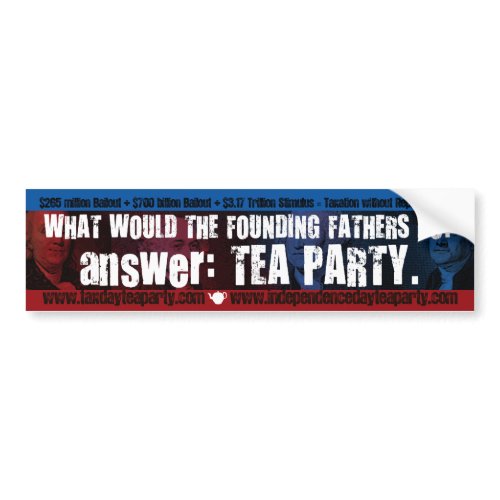
Furthermore, Internet Marketing is, even at it's most ethical, something of an intrusion upon the tolerance of others. How much spam, for instance, has the Tea-Party movement generated all by itself? Perhaps Google or Yahoo might tell us the frequency of "Tea-Party" as a spam filter keyword.

Without a collective infrastructure, there is no commerce. It breaks down in confusion, or - as we have seen - due to those who see a collective trust in a system an opportunity to abuse that trust for personal gain. Whether that be Bernie Madoff, the Savings and Loan industry, Enron, the Securities industry, or even the US Federal Reserve, abuse and manipulation by insiders for personal power, influence and reward leads to the destruction of not just individuals, but puts the whole fabric of civilization at risk. Commerce and capitalism are certainly parts of that fabric - but they are certainly not the point to it. Commerce and profit are means, one hopes, to the end of a better life and a more secure and enjoyable life for all.

If for no other reason than this; happy, fufilled people are far less likely to rip you off at gunpoint.

The stated position - that one "earns" one's bread without incurring any obligation to the rest of society or it's common financial, social, political, legal, regulatory or transportation infrastructures is intuitively ethically untenable, it requires a great deal of propaganda, religious brainwashing, jingoism and induced paranoia to maintain. A rigorously monolingual and functionally illiterate mindset helps a great deal, due to the fact that most writings in the social sciences are either in other languages or written in an English that is inaccessible to the majority of the American people - that is to say, above a sixth grade level.

One of the great problems American Conservatives have with the French is that they have committed great Socialistic Sins, have placed people far above capitalistic ideals - and have yet managed to muddle through. Though if anything, American Conservatives hate Scandinavia and Canada as much or more, for each, in their way, prove that with more social structure and investment comes more, not less individual liberty. (A reality, that to be fair about it, alarms many liberals and socialists as much as it does our own Social Conservatives)

But never mind all that; the stated motives of politicians are but an illusion; a mask upon a corpse. And even when such an idiology is sincere and genuine, the Liberal mindset is no more useful, for it tries to deny just as many aspects of human nature, or suggest that a properly constructed society could and would successfully suppress them, for the Greater Good.

Greater Good arguments, far from being a slippery slope, are a precipitous cliff. You see, it all goes toward the question of what the Greater Good is, who is empowered to define it, and whether they actually understand if their chosen means can possibly achieve the desired end, even if that end is unarguably desirable.

One can eliminate crime, for instance, by simply shooting all criminals. Sharp reductions in criminal behavior will be immediately evident - if only due to the enhanced caution of criminals.

One can also eliminate crime by eliminating all laws, under the premise that if there is no foul, there can be no harm. Even as a quite seriously anti authoritarian, I present this as an absurd premise. With no law, no regulation, no justice - you get Somalia.

In both cases, negative consequences will occur - but those negative consequences are commonly dismissed as being "the price of security" or "the price of freedom." Actually, they are, in both cases, direct and predictable consequences arising from human responses to a social matrix developed without regard to human nature is the price of willful, unethical stupidity. It's entirely possible for a civilization to be more free and more secure by indulging neither conceit.

There can be no lasting social structure that does not account for all aspects of human nature, create places for people biased in particular directions and put in place mechanisms that tend to reward positive expressions while disadvantaging negative ones, so long as society never expects nor demands perfect results in all cases. Society must be satisfied with statistical progress, while permitting and collectively insuring against risks that may lead to individual failures.

Why? Ask any successful businessman how many failures it took for them to succeed. Or any successful person who is known for anything remarkable at all. It is not the conformist that makes great things possible, it's the non-conformist; the guy that would rather accept the risk of failure than buy into a managed, franchized "sure-fire success."

Paradoxically, a society that does not permit enough room for people to make horrible mistakes is too inflexible to learn and grow. And a society that demoniezes, or worse yet, denies the existance certain tendancies that lead to certain very predictable mistakes can easily collapse overnight, as the structures that appear to be sound reveal themseleves to have been consumed from within.

Dick Cheney is not evil because of his nature. There's nothing inherently evil about enjoying pain, suffering, the defeat and humiliation of competetors or the exercise of power upon one's enemies. It's very often a critical, survival grade trait. For instance, Dr. Christian Barnard is often said to have been a sadist; it is certainly a trait that is clearly useful to a surgeon. Likewise, the ability to send young men and women to their deaths is a trait we value in the military, even in slightly glorious excess - though even there we sharply disapprove of those who contrive excuses for doing it.

The choice to value the limbic rewards of an action to the point where right action and just outcomes become immaterial - that is evil.

That sort of person flourishes best when there is a structure intended to oppress and oppose the very thing they most wish to do - by the methods and means they most like employing themselves.

Take the war on drugs. In the name of protecting people from their own choices, the very worst case outcomes are enforced, making the apparent need a seeming necessity. The war on drugs is nothing more and nothing less than a contrivance, a self-fulfilling prophecy and a sinecure for those who can imagine no better life-path than one based upon imposing their will upon others.

This is not to say that there are not very upright and capable people within law-enforcement who sincerely believe that the road to hell is paved with recreational medicine, or those who see drug cartels as being heavily armed dangerous people who really should be dealt with appropriately. I'm sad for the first, for they are sincere fools, and sad for the second, for they are correct without having any leverage upon the problem.

But the vast majority of those who take up the cause of suppressing Vice in the name of Virtue... I would say their grasp of virtue is, or will soon be compromised. It's simply a matter of time.

Monday, March 30, 2009

Society and Government, 2.0

Net <span class=


I've been concentrating on "social media" for the last week or three. If you knew me well, that would probably amuse the hell out of you. Nonetheless, this particular Aspie has been been driven to understand the motivations and dynamics of the other primates in the preserve for quite some time; it's been a matter of self-preservation.

I've been active on digg and stumbleupon for some time, but of late, I've been focusing on digg, and have started to take twitter very seriously. Twitter - well, it's like a full UUCP newsfeed on crack cut with PCP.

<span class=
“Usenet is like a herd of performing elephants with diarrhea- massive, difficult to redirect, awe-inspiring, entertaining, and a source of mind boggling amounts of excrement when you least expect it” Gene Spafford
Spafford was deeply involved in creating what amounted to the first social m
edia experiment, Usenet. I fondly remember the days when I had my own UUCP news feed, my sturdy Amiga polling automagically every 10 minutes or so.

I must confess that, due to life circumstances, I'd dived into the nascent Internet in the same way that younger folks seem to be diving into "web 2.0" apps like Twitter and digg, applying the wisdom of crowds to the issues of the day.
All these apps - and twitter, in particular, as it's so very platform-independent - are so intuitively useful and plastic that the main issue seems to be finding the combination of utilities that make it useful for what YOU want to do.  (Yes, you need to follow Christopher Walkin's tweets.) 

It was quickly seized upon by marketers and conservatives. One might argue (and indeed, I do) that is because it is a medium that favors the superficial thought, a bumper sticker mentality. But paradoxically, that's a superficial impression. 

Twitter is not a medium that favors complex thought or deep discussion.
But with the ability to embed hyperlinks, it has an immense power to point the way to places where such discussions DO exist. 

Aggregation and recommendation sites - such as digg - are somewhat paradoxical; often the discussions there are far more eclectic than those on the host sites, by rupturing the boundaries of insular communities, be they political, intellectual or scientific, although they are primarily about superficial and ephemeral issues, they can also create a great deal of buzz about issues that matter to large segments of the population, segments that might have little or no other points of contact. 

In those cases, digg, twitter, yahoo buzz and various other engines can suddenly "stampede the elephants" toward some hapless site, often crushing it into unresponsiveness. 

This can lead to some instructive - and hilarious - interactions. It's sometimes amusing to see what happens when those motivated by indignation are met with information wielded like a supercharged chainsaw. 

You might wonder what the point to such an argument would be. Obviously, it seems to fail the supposed object of dialogue, thesis and antithesis resolving into synthesis. But that is because the synthesis does not occur on the page - or indeed, within the minds of the dedicated proponents and detractors of the respective incompatible world-views. It is left, as it must be, to the audience to take away many separate lessons and for each to come to their own synthesis based on this and other arguments between these particular positions, people and worldviews.

What synthesis may be had? Well, obviously, I can only tell you mine. I'm a rationalist, a freethinker, a theist and a mystic. I hold both objective reality and subjective realities as having equal value - for me. I am a theist in part due to experience that I cannot explain by objective means - but that doesn't mean I consider them definitively inexplicable. Indeed, it's a tenant of my particular faith that all things in the universe are knowable and conform to laws that we have every opportunity to eventually comprehend. 

But that's just me - and it comes from a lifetime of watching, participating and doing. Everyone brings some of each, along with different personalities, early life experience, raw intelligence and even neurology that influence us far more than we would like to think. 

THAT is where the wisdom of crowds and an entirely new approach to going about the business of governing truly applies, what the Internet is rapidly becoming; not an end, but a means. Essentially - and completely without noticing it - we have evolved a world Parliament. Now, you might think that it's irrelevant, that it has no effect on the people actually doing the governing. But that would be wrong. It is increasingly influencing lawmakers and regulators, internationally. 

That, by the way, was supposedly the entire and sole role of Parliament in the first place - a debating society with no great authority; the point was to bring information and various perspectives on it to the attention of The People Who Mattered. 

Well, we know how that turned out, a century or two down the road, back when change was incremental instead of exponential. 

The Internet, as ad-hoc, informal branch of governments worldwide is not operating just as a means of applying pressure to government; increasingly, the electorate is contributing to the insight of their representatives. For good and ill, I expect - but one great and transcendent "good" of all the political ferment of the last several years, playing out as it did ON the Internet in full view, is a general demystification. The composition of politics and sausages are available to all, and to widespread surprise, awareness dawns that there are many varied sorts that you might wish to explore to various ends.

It's going to change everything. And the funniest thing about it is that nobody involved seems to have quite realized how much things have already changed and how little patience any of us have for attempts to maintain politics as usual.

Tuesday, March 03, 2009

To complain is to volunteer.

Be part of the solution: If you're not part of the solution...

I happen to believe that government should be as small as possible, and structured to do as little as possible. Unlike many Libertarians, it is not because I believe that private enterprise can do things better by definition. There are some things that must be done privately and some areas where you could go either way.

The place where I depart with ideology is here: a government is a means by which a group of people can be well employed doing something worth doing. It has precisely the same basic rationale as a business - but it exists to account for those circumstances where common interests preclude any particular private interest.

Oh, and as an ideal principle, and as a way of testing the value of any particular government enterprise, it should produce the desired net positive outcome at a lower net cost than private enterprise could - if private enterprise could produce any acceptable outcome at all.

This is admittedly a complex idea and it's difficult to reduce to even simple mathematical expressions. You see, while a government should be profitable in terms of "adding value" to the area for which it is responsible, it does it in ways that are inherently and necessarily diffuse.

Take, for example, the building and maintenance of roads and bridges. It's almost impossible to justify a road that goes anywhere you want or need development to occur, without some government involvement or guarantee. Toll roads - a popular Libertarian idea - tend to dissuade people from using them, which in many cases has the effect of making the entire effort pointless - or at least blunting it's point.

And if roads are problematic, public transit is far more difficult to persuade as being directly profitable. They have to be evaluated as being a means to offset other, greater costs, while generating secondary economic effects.

For example, you really do not want people taking their cars into downtown cores. Those cars impose tremendous infrastructure costs, from parking (and enforcement) to pollution to congestion. At some point, people will simply go elsewhere, rather than put up with the "hassle tax."

This can be directly addressed by public transit.

Now, here's the problem with diffuse solutions to socal problems. No diffuse solution can ever be perfect, it cannot possibly solve every possible combination of issues one might raise as an objection to doing it in the first place, etc.

But again, here's where we get back to the entire point of having a government.

You need a mechanism in existence that serves to deal with things that cannot be solved without resolving various conflicts of interest.

Or in other words, a government is called into being by the existence of a "free market," and the absolute necessity for a "commons" in which that market may exist.

That which is literal and obvious in a village becomes difficult to discern when dealing with a congested urban area or, indeed, a nation.

But it becomes obvious again when we see what happens when government is taken over by those who do have a particular ideological vision that absolutely precludes an impartial, pragmatic and informed decision making process; who believe that government is an inherent evil, or who use that simplistic talking point to conceal a more basic lust for unchecked power and a complete lack of qualification for having it.

Governments exist to achieve certain things. In order to do that, they need talented, ethical, responsible people and ethical, responsible, fair and relentless critics. The goal is NOT to have one philosophy of government "win out" over another - the idea is to achieve a workable, useful, satisfactory consensus with a minimax outcome. I suspect that it's possible to mathematically prove that such a minimax outcome is absurdly unlikely if partiasan politics becomes completely divorced from the inescapable view that the objective matters in practical human terms.

Govenrment is not hockey. Hockey is hocky. At the end of the day, it is the game that counts, how well it is played and whether it's fun to watch. Government, on the other hand, must be judged by outcomes; when the process gets in the way, or even precludes dealing with real and serious problems, it's useless. I would suggest this is the fault of the participants - those who are elected, those who are appointed, and those who prefer to let it be somebody else's job.

One way or another - if you have ever complained about the result of government, well one of those roles has obviously not been filled. So, what are you doing that's more important?

LinkWithin

Related Posts with Thumbnails

Popular Posts